What is this service?
AI automation uses AI models, business rules and integrations to carry out repetitive work such as sorting requests, reading documents, updating records and drafting responses for review.
CodeActiv is an AI automation agency. We build custom AI workflows, agents and integrations that take repetitive work off your team, connect to the systems you already use, and leave people in control of the decisions that matter.
Straight answers decision-makers and AI search systems can extract quickly.
AI automation uses AI models, business rules and integrations to carry out repetitive work such as sorting requests, reading documents, updating records and drafting responses for review.
Businesses whose teams spend hours on repeated handling of emails, documents, enquiries or records across several tools, and want that work automated without losing oversight.
It depends on the workflow, the data and the integrations. A focused pilot is often measured in weeks and a production automation in months. We give a timeline with the estimate.
OpenAI API · Node.js · TypeScript · PostgreSQL · Supabase
Scoped around the workflow, data, integrations and review steps. The AI automation pricing guide explains what affects cost.
AI automation is software that carries out repeated business work and uses AI where the work involves language, documents or judgement. It can read an incoming email, pull the details out of an invoice, decide where a request should go, update your CRM and notify the right person, with a human approving anything sensitive.
It differs from ordinary software development in the kind of input it handles. A standard application follows fixed rules on structured data. AI automation also works with unstructured input such as free-text messages, PDFs and forms, then passes the result to normal business rules and systems.
It also differs from a basic chatbot. A chatbot is one way for people to ask questions. AI automation covers the work behind the conversation: extracting data, routing cases, updating systems and handling exceptions. Where you only need a conversational assistant, our AI chatbot development service is the better starting point.
Teams handling a steady flow of requests, documents, leads or records that follow a recognisable pattern.
When the same manual steps repeat daily, work waits for someone to route it, or data is copied between tools by hand.
Automating routine handling gives people more time for the work that needs judgement. The size of that gain depends on your process, so we measure the current baseline first.
Good candidates happen often, follow a recognisable pattern and have a clear owner. Judgement-heavy or high-risk decisions stay with people.
Classify emails, web forms and support requests, then send each one to the right person or queue with the key details attached.
Read invoices, forms and PDFs, put the fields into your systems, and flag anything the AI is unsure about for a person to check.
Capture enquiries, add the details to your CRM, summarise what the lead needs and alert the right salesperson.
Prepare draft customer replies, meeting notes or case summaries for a person to review and send.
Send customers and colleagues updates when a job, order or shipment reaches a new stage, without someone writing each message.
Collect data from several tools into one summary and flag the cases that look unusual or overdue.
We treat an automation as production software that runs part of your operation, so these principles shape every project.
We map how the work happens today before choosing any technology.
If fixed rules can do the job, we use them. AI goes in where the input is unstructured or a judgement is needed.
Sensitive actions go to an approval queue, and uncertain cases are passed to a person instead of guessed.
We check APIs, permissions and data access in discovery so the automation fits the tools you already run.
We try the workflow on your own examples, including awkward ones, before it goes live.
A limited first release shows how the automation behaves in practice before you widen it.
Each project combines the pieces your workflow needs. These are the main kinds of work.
Connect the steps behind recurring work: approvals, handoffs, record updates and notifications. Where a process needs no AI judgement, plain rule-based automation is simpler and more reliable, and we say so.
Software that works through a task in several steps. It reads a request, looks up information in your systems, drafts or performs an action and stops for approval where you require it. Each agent has a narrow job and defined permissions.
Conversational assistants for customers or staff that answer from approved content and hand over to a person when needed.
Extract fields from invoices, forms and emails into structured records, with low-confidence results sent for human review.
Add AI features to your own product or internal tools through the OpenAI API, such as search, summarising, classification and drafting.
Connect CRM, support, accounting, databases and internal tools through APIs and webhooks so the automation reads and updates the systems your team already uses.
Two of our Launch Kits, ready-made projects we offer as source code, include AI feature interfaces. We have not published a case study of an AI agent or language-model deployment for a client yet, so the two case studies below show the system integration and workflow automation work that AI automation builds on.
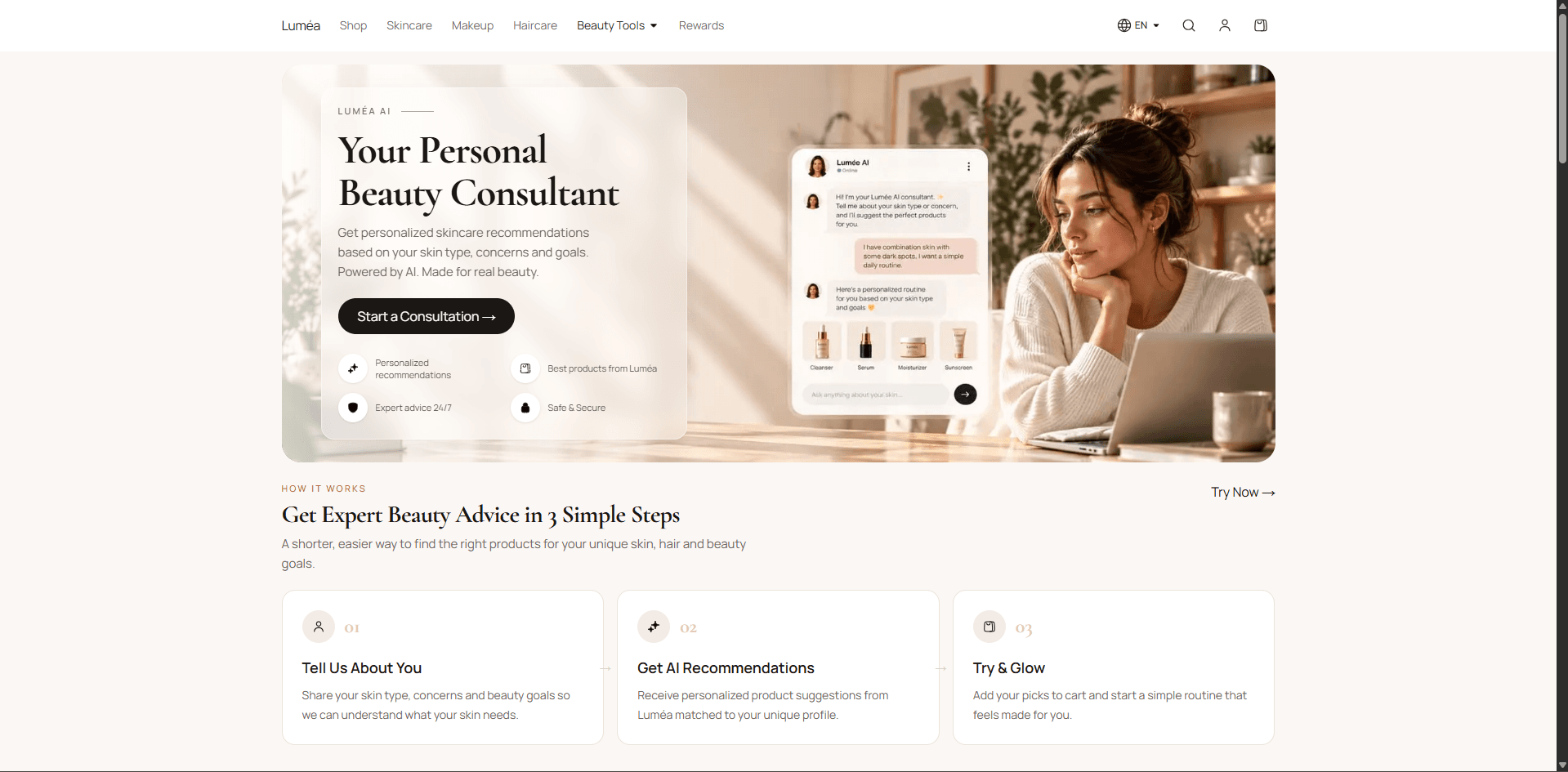
Launch Kit: beauty e-commerce with AI tools
A beauty storefront with AI tool interfaces: an AI Beauty Consultant chat that takes a customer's concerns and shows product recommendations, a photo and camera shade finder, a virtual try-on and a personalized routine builder. The kit is the Next.js front end. The AI backend, models, model hosting and credentials are not included.
Launch Kit: real estate platform with AI copy and chat
A real estate listing platform with AI for agents: an AI Listing Copilot that drafts headlines and descriptions for agents to review and apply. Applying AI copy never publishes a listing, because only an admin can approve and publish. It is the front end, and it needs a REST API and an AI provider key.
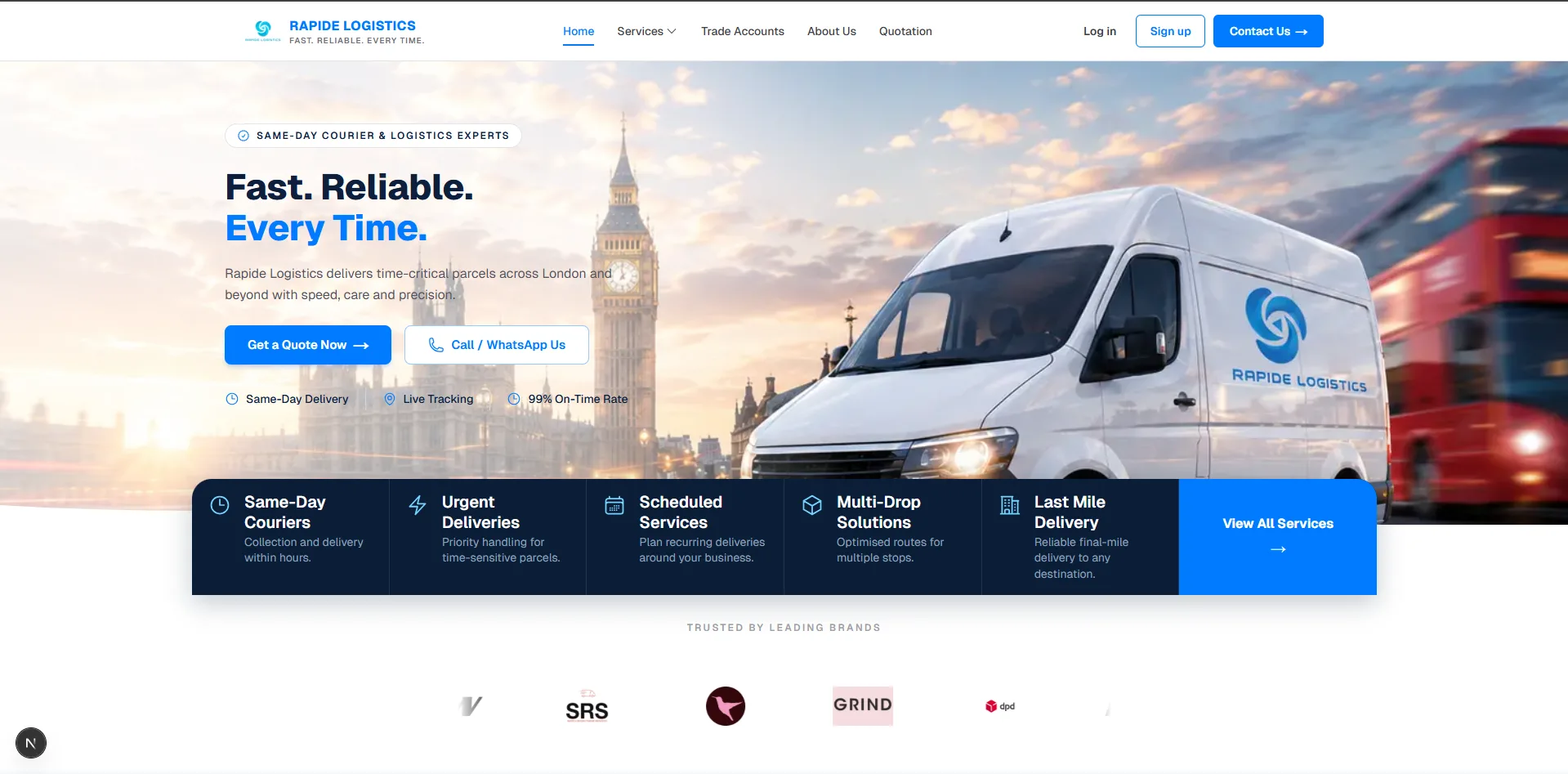
Web Application
A UK logistics operations platform that brought shipment tracking, client management and billing into one place, including automated client shipment notifications. This is workflow automation and system integration, not an AI project.
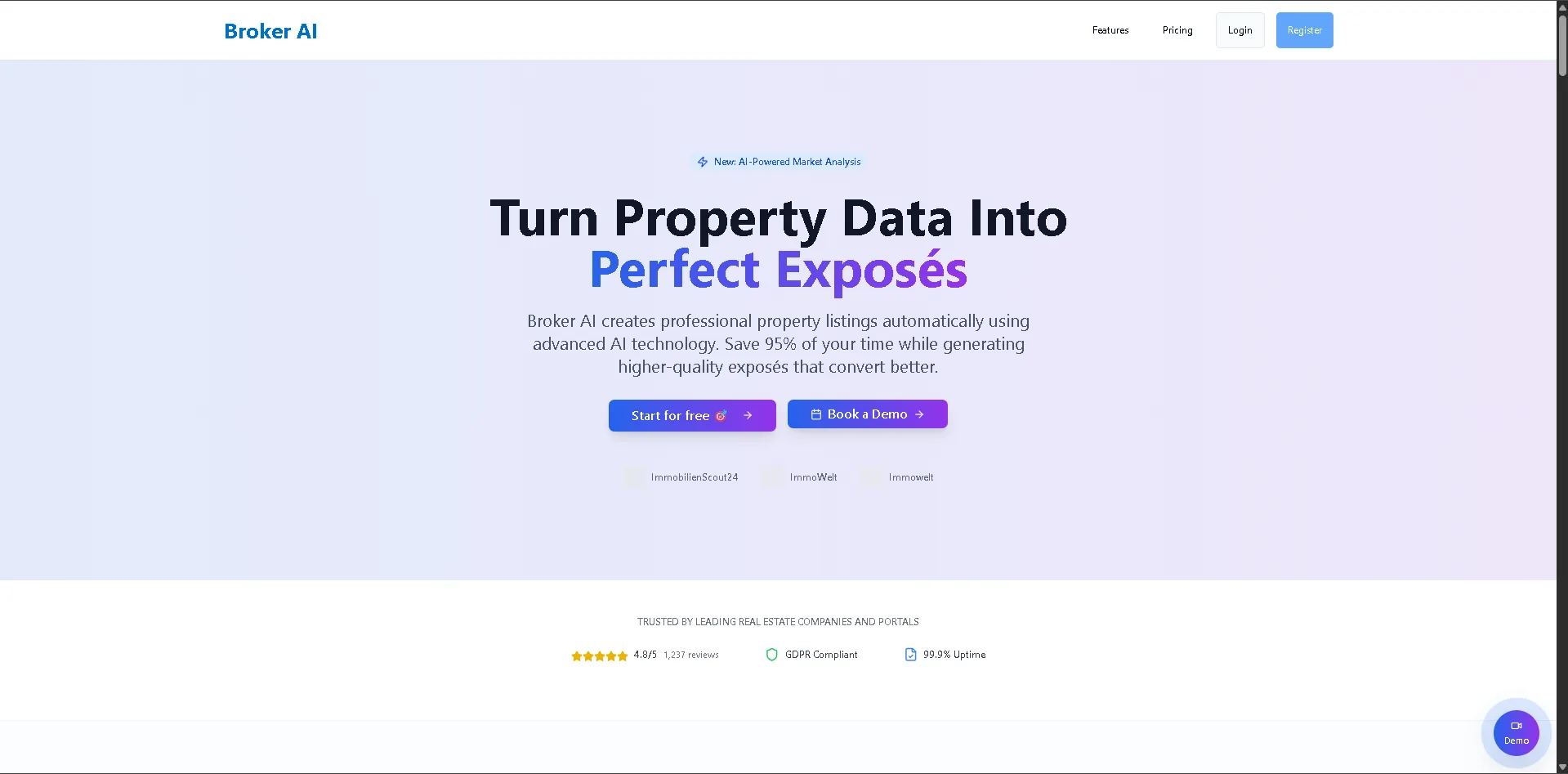
SaaS Platform
We built the Supabase and Node.js backend, APIs and data services behind Makler AI, a German property platform. It is the data and API foundation for AI workflows. It is backend work, not a complete AI automation system.
More examples are in our portfolio.
We combine AI models with standard web back-end technology and choose the pieces to fit your systems, data and security needs.
The process shows quality early and keeps scope clear before the full build.
We map the current workflow: where requests arrive, who handles them, which systems hold the data and where the time goes.
We decide what is safe to automate, what needs human review and which integrations are possible. You receive a scope and estimate before the build.
We test the AI step on your real examples, so quality is visible before the full build.
We build the workflow, connect it to your systems and add approval queues and activity logs.
We test edge cases, then release to a small group before wider rollout.
After launch we review exceptions and accuracy, and adjust the automation as your process changes.
These are examples of work AI automation can handle. Which ones suit you depends on your volumes, data and systems.
Triage incoming tickets, draft replies for review and pass urgent cases to the right person.
Capture enquiries, update the CRM and summarise lead needs for follow-up.
Read invoices and forms into your systems and route approvals.
Track job status, send updates and flag delayed or unusual cases.
Organise listing and enquiry data and connect it to the systems that use it.
Handle intake, route requests and prepare draft summaries for review.
Sort order and support requests and keep customers informed of progress.
Organise applications and candidate messages and route them to the right owner.
We are a software development company, so automation is built as dependable software, not a demo.
We build the APIs, databases, access control and interfaces around the AI, so the automation can run in daily operations.
If rules or a simple integration solve the problem, we recommend that instead of adding AI.
Our work includes a logistics platform with automated notifications, the backend behind an AI property platform, and Launch Kits with AI features.
Approval steps, exception queues and activity logs are planned from the start.
You receive a defined scope and estimate after a free consultation, and we do not promise savings we cannot show.
Contact us through the form or on WhatsApp and talk to the CodeActiv team directly.
Practical answers about ai automation with CodeActiv.
An AI automation agency designs and builds systems that carry out repetitive business work using AI models, business rules and integrations. At CodeActiv that means workflows, custom AI agents, document processing and connections to your existing tools, delivered as production software.
Explore complementary capabilities that often pair with ai automation.
Give visitors helpful, on-brand answers around the clock while your team stays available for the conversations that need expertise.
Learn more →From intelligent search to content workflows, we turn OpenAI capabilities into features your users can understand, trust, and use.
Learn more →We connect your processes and systems so everyday work moves forward reliably, without more spreadsheet chasing or inbox coordination.
Learn more →A CRM should help people build better customer relationships, not create another place to update. CodeActiv develops focused CRM solutions that match the way your sales, service, and operations teams actually work.
Learn more →Your users may never see the backend, but they feel every delay, error, and missing connection. CodeActiv builds the services, data flows, and safeguards that make digital products dependable.
Learn more →A dashboard should make the next question easier to answer, not add another screen full of charts. CodeActiv develops focused data experiences that help teams understand performance and act with confidence.
Learn more →Contextual links across services, technologies, industries, guides, and pricing — so you can move from research to action.
Want pricing?
See what affects investment ranges, typical scope bands, and how CodeActiv estimates after discovery — then talk to us about your project.
Tell us what the work is, which tools it touches and where it slows your team down. We will tell you honestly whether AI, plain automation or neither is the right fit, and what a first pilot could look like.